

Parental Rights, Transgender Healthcare, and the Supreme Court
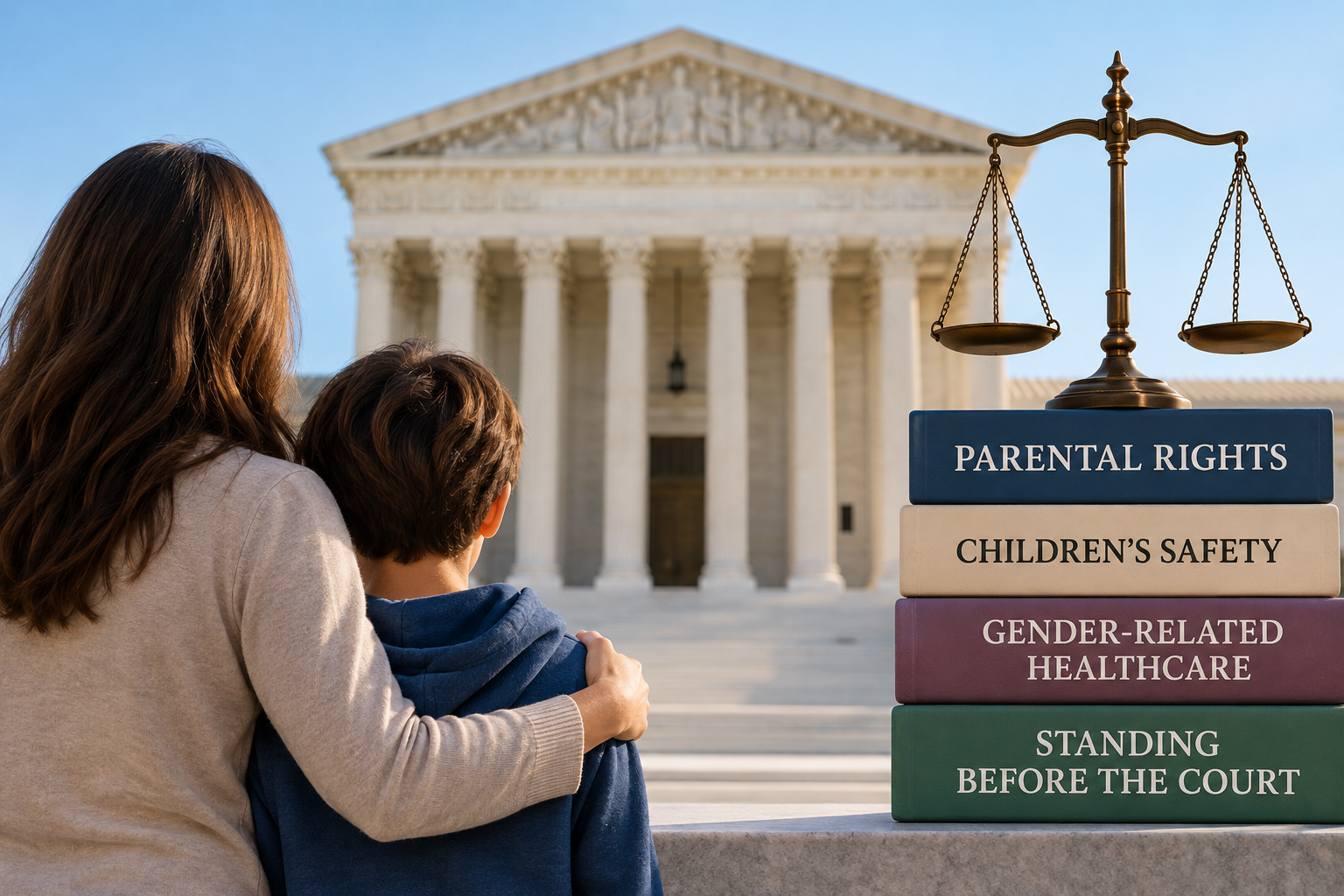
A Controversial Law Raises Important Questions About Parental Rights
What happens when a teenager runs away from home and seeks help from a shelter? Should the shelter be required to notify the child's parents? What if the teenager is seeking gender-related healthcare and fears that returning home could place them at risk?
These difficult questions are at the center of a case now before the United States Supreme Court.
The court just granted cert. in the matter of International Partners for Ethical Care v. Ferguson, where it has been asked to review a challenge to Washington State laws that, under certain circumstances, allow shelters to delay notifying parents about runaway children seeking certain protected healthcare services, including gender-related care.
The parents challenging the laws argue that Washington has improperly interfered with their constitutional right to raise their children and make important decisions about their healthcare.
Washington, on the other hand, maintains that its laws are designed to protect vulnerable young people who may be unwilling or afraid to return home.
Both sides raise important concerns. But the Supreme Court may never decide which side is right.
Why the Supreme Court May Not Decide the Parental Rights Question
It’s very likely the Plaintiff’s do not have standing, in my opinion.
Standing simply means that a person must have a sufficient personal stake in a dispute before a federal court can hear the case.
The Plaintiffs’ children never sought such treatment, never ran away, and were in no way affected by the Washington law.
Can these Plaintiff’s challenge the law immediately, or must they wait until something actually happens?
That is essentially the question before the Supreme Court.
The parents argue that they should not have to wait until their children run away or receive services without their knowledge before challenging a law they believe threatens their parental rights.
Washington argues that the parents' concerns depend on events that may never occur. Without a sufficiently concrete injury or threat of injury, the state maintains, the federal courts cannot hear their claims.
What About the Rights of Children?
The case also raises questions about children's safety and independence.
Supporters of Washington's approach argue that some teenagers may face abuse, rejection, or other serious consequences if their parents are immediately notified about their circumstances.
Opponents argue that the government should not exclude otherwise fit parents from important decisions involving their children's welfare.
These competing concerns involve fundamental questions about family relationships, parental authority, children's safety, and the appropriate role of government.
But those are not necessarily the questions the Supreme Court will answer.
What Will the Supreme Court Actually Decide?
The Supreme Court has agreed to review the case, with oral argument scheduled for December 7, 2026.
The central issue is whether the parents have standing to bring their lawsuit.
If the Court concludes that the parents lack standing, their federal lawsuit cannot proceed in its present form. The Court would not need to decide whether Washington's laws violate constitutional parental rights.
If the Court concludes that the parents do have standing, the lawsuit may proceed, allowing the lower courts to consider the constitutional questions.
Why This Case Matters to Families Everywhere
Although the controversy involves transgender healthcare, the legal principle extends far beyond that issue.
It concerns when parents may seek judicial protection against government policies they believe threaten their relationship with their children.
The Supreme Court's decision could influence future lawsuits involving parental authority, education, medical treatment, and government involvement in family life.
For families following this case, the important distinction is between having the right to challenge a law and actually proving that the law is unconstitutional.
The Supreme Court may decide only the first question, leaving the more controversial issues for another day.
And that is an important reminder about our judicial system: Sometimes the most consequential Supreme Court decisions concern not who is right or wrong, but who has the right to ask a court to decide.
Guy Vitetta, Charleston SC
Sources
- International Partners for Ethical Care, Inc. v. Ferguson, No. 25-840 — U.S. Supreme Court — Guy J. Vitetta, Esq. (2026-10-11)